
Identifriday star plant 30th January – Davidia involucrata
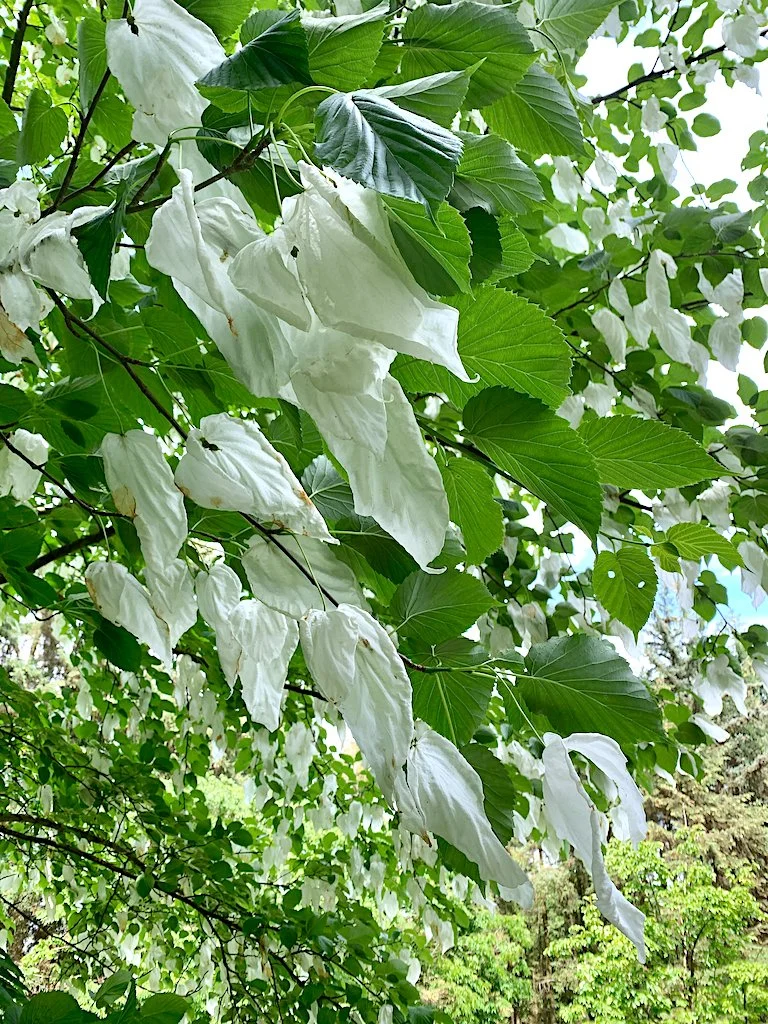
Davidia involucrata, Harlow Carr by Paul Harrop, CC BY-SA 2.0 via Wikimedia Commons
Identifriday is a weekly plant identifying quiz run on Instagram (@alexpettitt.la) for all to take part in. Each week, one plant is selected for a turn under the spotlight; a write up profile of the plant takes in any cultural impact, traditional or modern uses, ecological value, or simply their use in gardens from a design point of view. It’s a little bit of fun, come and give it a go! Originally posted on Alexs Substack.
Davidia involucrata is a medium sized, although with a broad canopy, which goes by many a common name, each alluding to the showpiece feature of this tree. Most commonly know by UK gardeners as a Handkerchief tree but also going by Dove tree and Ghost tree sobriquets, the tree quite clearly is known for and coveted for one thing: the pure white bracts which surround and drape around the fluffy-looking inflorescence. As many of you will know, bracts are a kind of leaf, which often appear to the untrained or more romantic eye as a petal – albeit with a huge textural difference between the two if you get your fingers involved. In fact, the common English names are not the only ones to get in on the act; the specific epithet ‘involucrata’ from the latin to roll in and envelope, which refers to the two disproportioned bracts surrounding the inflorescence.
While Latin semantics can be descriptive and aid in the identification of the plant, they can perhaps disguise the true beauty and poetry of the being. The two bracts on each flower hang beneath the surrounding foliage, which paired with the tree’s umbrella form leads to a view akin to nature hanging out it’s washing, the ‘handkerchiefs’ dancing, as if pinched and waved, in light an early summer breeze. The size of said bracts and the pure white colouration against the dark green leaves lend themselves to this romantic spectacle, and are the main draw, the why when asking why it is such a beautiful specimen plant, why it was brought back from Yangtse Ichang, China to Europe and Victorian Britain.
The somewhat peculiar structure of the flowers is explained away once the plant’s lineage is considered, it belongs to the Tupelo family, Nyssaceae, part of the Cornales order. As some eagle-eyed readers may already assume, this is the order that includes the Dogwoods as well as Hydrangeas, both proponents of eye-catching bracts surrounding more demure inflorescences. Another oddity of this group of plants is their Fibonacci-confounding habit of their structures presenting in pairs, Cornus and Hydreangea bracts grow as a gang of four, leaves grow as opposite pairs. Davidia also fits within this trend with two asymmetric bracts per flower.
While the flowers hog the limelight, the foliage perhaps tells a more interesting story. The leaves resemble a neater, symmetrical version of those of the native Tilia, dark green on the upper surface and pale green on the underside. The underside of the leaves also features the secret to Davidia viability for life in Europe: they are covered in fine hairs, which helps the tree from losing moisture in hotter climes. Mediterranean and Caucasian plants also display this adaptation, sometimes to extremes such as Stachys byzantina and a number of hairy (or hoary) Verbascum species. These hairs act to trap moisture exiting the leaf through the stomata, reducing the rate of transpiration, and protecting the plant from drying out in the high summer heat.
D.involucrata is perhaps best-known outside of its native realm to be a glorious specimen tree, gracing public parks and larger ornamental gardens. It’s role in the garden, while hosting a banquet for visiting pollinators, is primarily that of a breathtaking taste of the exotic. It sits alongside other exotic feeling species; Koelreuteria paniculata, Catalpa bignonioides, Paulownia tomentosa, among many others which have made their way across the globe, carried in the imaginations of an empire state of mind. While it is prescient to consider the colonial methodology for these species migration, an open appreciation for these beautiful trees mustn’t be discarded. They are still astoundingly beautiful.
I had the pleasure of experiencing Davidia in full flow at the end of each year at university, a beautiful, generously broad canopied specimen sat in between the accommodation blocks on Writtle College’s campus. A sight that stays in the mind long after the bracts fade & fall, it is very much worth considering planting if you are lucky enough to be in the position to accommodate one in your garden.
Subscribe for all of the latest Identifriday write-ups, posted every weekend.