
Identifriday star plant 16th January – Zanthoxylum simulans
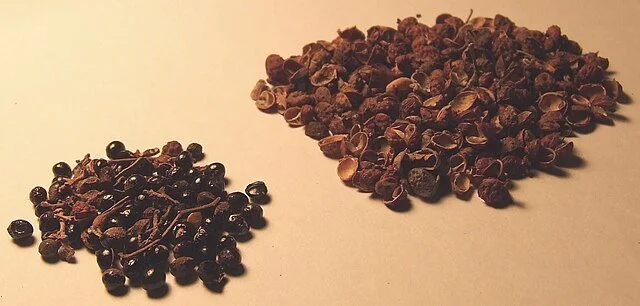
Photo by Chameleon, Wikimedia Commons
Identifriday is a weekly plant identifying quiz run on Instagram (@alexpettitt.la) for all to take part in. Each week, one plant is selected for a turn under the spotlight; a write up profile of the plant takes in any cultural impact, traditional or modern uses, ecological value, or simply their use in gardens from a design point of view. It’s a little bit of fun, come and give it a go! Originally posted on Alexs Substack.
Zanthoxylum simulans or Sichuan Pepper is a native small tree from central China, with the range extending to the Korean peninsula. It is one of the species from which Sichuan Pepper is cultivated, a spice often sold in the UK alongside Black and Green Pepper, but that categorisation perhaps diminished some of the stardust contained in these zingy little things. Not only are they not berries in the true sense, as the Piper nigrum is, but the flavour profile and mechanics of the spice are perhaps that much more complex and interesting. Furthermore, Zanthoxylum is not closely related to Piper, nor the other pepper lurking in the background of this culinary conversation, the Chili and Bell Peppers belonging to the Capsicum genus. This ‘pepper’ is actually a member of the citrus and rue family, Rutaceae.
Sitting upon their tree like pink dew drops, the spice element is actually the pericarp of the fruit, the outer husk which contain small black seeds. While us knuckle dragging westerners instinctively lump Sichuan Pepper in with other peppers, the spice provides nuanced flavour to Chinese cuisine – utilised in dishes such as mapo doufu and Chonhqing Hot Pot; it provides a citric buzz, even numbing the tongue in the process. This numbing pepperiness embraces the sweat-inducing heat of the Chili Pepper in a traditional Chinese flavour type called ‘Málà’ also known as ‘Numb-Spiciness’.
While capsaicin creates a hypersensitivity to heat, Sanshool – the compound found in Sichuan – creates a hypersensitivity to touch and cold. The Sichuan provides this flavour handshake with a citrussy, zingy numbness while the chili sets the mouth ablaze. Move over Katy Perry, there is a new favourite Hot N’ Cold on the scene.
From a design and garden perspective, this tree is under-utilised in the western garden. It’s compact size puts it in the category of modestly and, perhaps most pertinently, ruly trees for the smaller garden, a category dominated by Amelanchier lamarckii ubiquity. While the leaves are underwhelming, the older stems grow dragon-esque spines, creating a much keener texture than the popular mespil. As a naturally multi-stemming tree, Z.simulans provides an attractive option in a garden too small to be overwhelmed by a host of larger growing trees; the pink peppers provide a gorgeous haze across the entire plant at the end of summer, as well as giving the lucky custodian of the tree the opportunity for grazing, gathering, and zinged-up gin drinks on a golden summers eve.
Subscribe for all of the latest Identifriday write-ups, posted every weekend.